 Tmailor
 Is Temp Mail Anonymous, and Can It Be Traced? An Honest Answer
Temp mail keeps your real inbox off signup forms and out of low-trust databases, but it does not make you anonymous. Your IP address, device, timing, and anything personal you submit can still connect the activity back to you — so treat a disposable address as a privacy layer, not a disguise.
Quick access
Key Takeaways
What temp mail really does for your privacy, in one screen.
- Temp mail keeps your real inbox hidden from the site you sign up for, but the site can still see any name, phone number, payment detail, or other information you choose to submit.
- It is not technical anonymity. It does not mask your IP address, encrypt your traffic, or make you untraceable.
- The random address alone usually cannot be traced back to you, but the IP address, device, and any real details you type can.
- A standard inbox is shared and semi-public; protect a reusable one with its Access Token.
- For genuine anonymity, use a VPN or Tor; for accounts you must recover, use your real email.
The short answer: private, not fully anonymous
One distinction answers the whole question.
Temp mail hides your real inbox from the website you sign up for and gives you a stand-in address, but it does not make you anonymous. Your IP address, your device, the shared inbox itself, and anything personal you type can still connect that signup back to you.
In practice, that distinction is the whole answer. A disposable address is excellent at separating your real identity from a random account, which is exactly what most people want. It is not built to make you untraceable to your network, your internet provider, or anyone determined to correlate metadata. Treat it as a privacy layer, not an invisibility cloak.
Anonymous vs. private vs. pseudonymous
Three words people use interchangeably, and why the difference matters here.
Anonymous means no one can tie an action to your real identity. Private means others cannot read your contents or see your real inbox. Pseudonymous means you act under a stand-in identifier. A Tmailor address is pseudonymous and fairly private, but it is not truly anonymous.
- Anonymous — the activity cannot be linked to the real you by anyone, including your network and the service.
- Private — others cannot see your real inbox or the message contents, yet your identity may still be inferable from other signals.
- Pseudonymous — you use a stand-in address instead of your real one, but that stand-in can still be connected to you through context.
Temp mail lands squarely in the last two. That is genuinely useful, and it is also the reason the honest answer to "is it anonymous?" is "no, but it is private enough for most things."
What temp mail keeps private
The real, legitimate privacy wins of a disposable address.
A disposable address keeps your real inbox out of a site's database, so a future data breach, list sale, or marketing blast hits a throwaway address instead of your personal one. The receiving service learns the temporary address and whatever you choose to enter, and nothing more about your real mailbox.
That separation is the core benefit. It keeps your identity apart from your account history, cuts the spam that follows one-time signups, and shrinks your exposure when a company you barely used is later breached — a real way to shield your identity from data breaches. None of this requires registration, and the inbox auto-deletes its messages after about 24 hours.
What temp mail does not cover
The parts of "anonymity" that a disposable inbox was never built to handle.
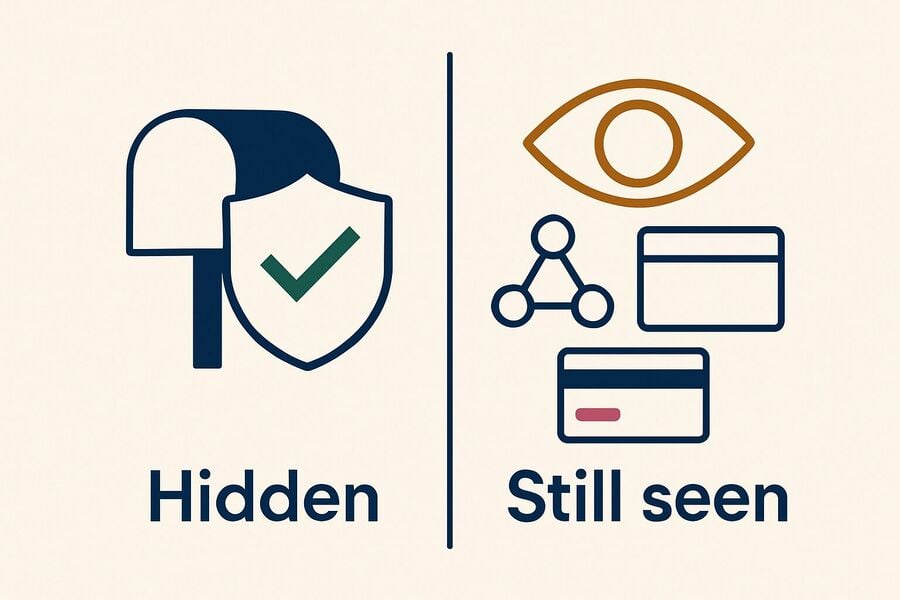
A temporary email does not mask your IP address, device, or network. It does not encrypt your traffic, and a standard Tmailor inbox is a shared, semi-public mailbox. Saving an Access Token lets you reopen the same inbox later, but anyone who has that token can open the mailbox too. Several things can still point back to you:
- The site sees the address and your inputs. Whatever name, phone number, or payment detail you enter into the form is real data the service now holds.
- Your IP is visible. The websites you use and the email service both see the IP you connect from; only a VPN or the Tor network changes that, and temp mail does neither.
- The inbox is shared. A default disposable address can be opened by anyone who knows or guesses it, so it is not private from other people, only from being tied to your real inbox.
- Metadata can be correlated. The same browser, device fingerprint, signup timing, or reused personal details can link a disposable account back to you.
- Messages are stored briefly. Incoming mail sits on the provider's servers for roughly 24 hours before auto-deletion, so it is not zero-retention.
Can a temp mail be traced back to you?
The honest, it-depends answer — and where the line falls.
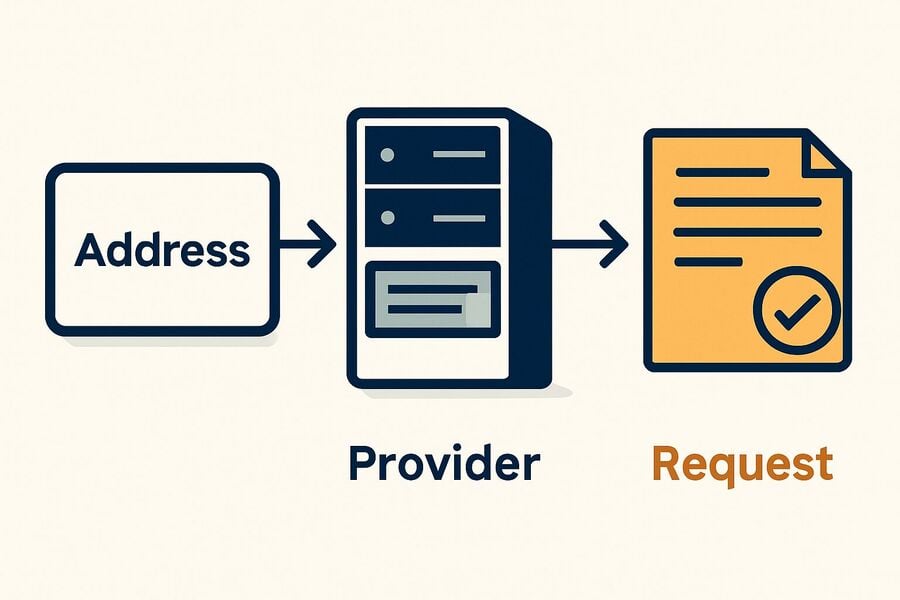
Usually, the address alone cannot. A random Tmailor address is not tied to your name. What can be traced is everything around it: the IP address you connected from, the device you used, a phone number or payment method you added, and any real details you typed into the form.
The honest answer is that it depends on what else you reveal. For an ordinary signup, the disposable address gives you solid practical privacy, and there is no realistic way for a random website to map it to you. For anyone whose threat model includes a determined investigator, a legal request, or a platform that correlates signals, temp mail is not designed to withstand that — and it should never be used to sidestep identity checks you are legally required to complete.
When temp mail's privacy is enough
For most everyday tasks, the disposable layer does its job.
For most everyday tasks, temp mail's privacy is exactly enough: forum and download signups, free trials, newsletters, one-time codes, and any service where you do not want to hand over your real inbox. The stakes are low, and the throwaway layer does its job.
These are the cases where a disposable address shines: you reduce spam, you keep your main inbox clean, and you lower your exposure if the site is later breached. If you want a fuller picture of whether temp mail is safe for these everyday uses, that is covered separately — but for low-stakes privacy, a temporary address is a sensible default.
When you need more than temp mail
Three situations where a disposable inbox is the wrong tool.
When you need real anonymity, or an account you must recover, temp mail is the wrong tool. For genuine anonymity, use a VPN or the Tor network with privacy-focused tooling. For accounts you intend to keep, use your real email or a forwarding service such as Apple's Hide My Email.
- A serious threat model. If being identified carries real risk, you need network-level anonymity (VPN or Tor) and dedicated tools. A disposable inbox does not provide that, and is not a tool for any illegal anonymity.
- An account you want to keep but privately. A forwarding alias, like Apple's Hide My Email, hides your real address while still delivering to a persistent inbox so you can recover the account later.
- Money, identity, or health. Banking, payments, government, and healthcare accounts need a stable, private email; see what temp mail can't do safely before relying on it.
How to stay more private with temp mail
A few habits to get the most privacy from a disposable address.
You can get the most privacy from temp mail with a few habits: rotate to a different domain, protect a reusable inbox with its Access Token, never enter real personal details unless you have to, and pair it with a VPN if hiding your IP matters for the task.
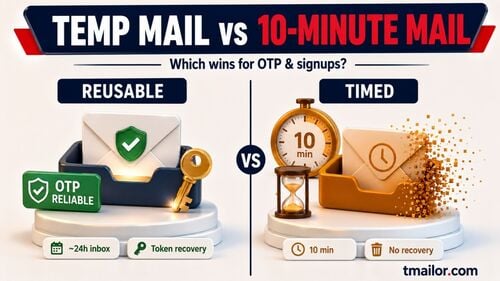
The Access Token lets you reopen the same inbox later, but it is not a password and it does not make the mailbox exclusive; anyone who has the token can open it, and a lost Access Token cannot be recovered. You can save your Access Token to return to the same address, and the token-based privacy trade-offs are worth understanding before reusing a single address across accounts you would rather keep unlinked. Add a VPN when your IP matters, avoid typing real identifiers into low-trust forms, and remember the 24-hour deletion window when timing anything important.
Frequently Asked Questions
Is Temp Mail anonymous?
No. Temp mail hides your real inbox from the site, but it does not make you anonymous. Your IP address, device, timing, and any real details you enter can still link the signup back to you. Treat it as a privacy layer, not invisibility.
Can temp mail be traced?
The random address itself usually cannot be traced to your name, but the IP you connected from, your device, and anything personal you typed can be. For ordinary signups, that is fine; for a high-stakes threat model, temp mail is not built to resist tracing.
Does Temp Mail hide my IP address?
No. A temporary email does not mask your IP or encrypt your connection. The websites you visit and the email service still see your IP unless you use a VPN or the Tor network. Temp mail handles your inbox, not your network identity.
Is temp mail private or anonymous?
Both partly, neither fully. It is private in that others do not see your real inbox, and pseudonymous in that you use a stand-in address. It is not anonymous because surrounding metadata, such as your IP and device, can still link the account to you.
Can someone else read my temp mail inbox?
Yes — a standard Tmailor inbox is semi-public, so anyone who knows or guesses the address can open it. The Access Token is a recovery key, not a lock: it lets you reopen that same address later, but it does not make the inbox private. Never have sensitive personal information sent to a disposable mailbox.
Can police trace temp mail?
Temp mail is not designed to defeat lawful investigation. The service stores messages for about 24 hours, and connection metadata exists at the network level. It is a privacy tool for everyday signups, not a shield for anything illegal, and should never be used to sidestep required identification.
Should I use temp mail to stay anonymous online?
For low-stakes privacy, yes — it keeps your real inbox separate from random accounts. For genuine anonymity, no; use a VPN or Tor with dedicated tools. Never use a disposable address to sidestep verification that you are legally required to complete.
The Bottom Line
Temp mail is private and pseudonymous, not anonymous. It keeps your real inbox away from the sites you sign up for, which is exactly what most everyday privacy needs. It does not mask your IP, encrypt your traffic, or make you untraceable, so keep your real email for accounts that matter and reach for a VPN or Tor when you need true anonymity. When you want a quick, semi-private mailbox, create a temp mail address and protect it with an Access Token if you plan to return to it.
Jordan Mills has covered disposable email, OTP delivery and online privacy since 2018. He writes Tmailor's guides on staying anonymous, avoiding spam, and getting verification codes to land every time.