Temp Mail for LinkedIn: Create a Temp Account Safely (Step-by-Step)
Create a LinkedIn account with temp mail in 2026 — whether LinkedIn accepts disposable domains, how to get the confirmation email, how to reuse the address via an Access Token, and when a permanent inbox is safer.
Quick access
Key Takeaways
Temp mail lets you create a LinkedIn account without exposing your personal inbox.
Temp mail for LinkedIn covers the email step of signup: you enter a disposable address, LinkedIn sends a confirmation email, and you confirm it in the throwaway inbox. It works, but LinkedIn is a real-identity network: address acceptance varies in practice, and separate LinkedIn Help pages cover 2FA, workplace verification, and account recovery. Save the Access Token so you can reopen the address for a later reset, and move to a permanent inbox once the account matters.
- A temp LinkedIn account is fine for privacy or testing — keep your real email off the platform while you try it. New to the idea? Start with free temp mail.
- Save the Access Token so you can reopen the same address to reset the password or change the email.
- LinkedIn is a real-identity network. Temp mail only covers the email-confirmation step, and LinkedIn also documents separate 2FA, workplace verification, and recovery flows for accounts that matter long term.
- Recovery matters here. LinkedIn profiles last for years, so a lost address is a real risk — an Access Token or a permanent email keeps access safe.
- Keep the profile truthful. Privacy at signup is fine; impersonating a company, Recruiter, or executive is not.
Does Temp Mail Work for LinkedIn?
Yes — temp mail can work for LinkedIn’s email-confirmation step if the address is accepted and the confirmation message arrives while the inbox is still available. LinkedIn sends a confirmation link to the address you enter, and you confirm it in the temp inbox. LinkedIn’s public Help pages document email confirmation for new and added addresses, but they do not publish a page listing disposable-email rules, so acceptance can vary over time; if an address is refused, try another Tmailor domain.
People search for this as a temp LinkedIn account, a LinkedIn temp account, a temporary LinkedIn account free, a temp LinkedIn profile, temp mail LinkedIn, LinkedIn temp mail, temp mail for LinkedIn, temp email for LinkedIn, or temporary email for LinkedIn — the practical requirement is always the same: LinkedIn must accept the address, and the confirmation email must arrive while the inbox is still available.
Why Use Temp Mail for LinkedIn?
Use temp mail for LinkedIn when you want to test the platform, keep recruiter outreach out of your main inbox, or separate an early-stage profile from your personal or work email. It works best for low-stakes signups; once the profile matters, switch to a permanent or work address you control long term.
- Keep a job search discreet. If you want to explore opportunities without tying the activity to your current work email, a separate address keeps it private.
- Cut recruiter and marketing spam. A new LinkedIn profile can attract a wave of outreach; a disposable inbox keeps that noise out of your main mailbox.
- Test the signup flow or park an early-stage profile. If you are experimenting before deciding whether to keep the account, temp mail lets you separate that first setup from your primary inbox. Keep the profile truthful and move it to a permanent email once it matters.
How LinkedIn Signup & Verification Works
For a new account, LinkedIn’s public Help flow centers on confirming the email address you entered. Separate Help pages cover turning on two-factor authentication, changing account email addresses, workplace verification with a current company email, and identity verification if you lose access or your account is restricted.
- Email confirmation: the must-pass first step, sent to your address.
- Phone or 2FA prompt: LinkedIn supports SMS and authenticator-app 2FA, and LinkedIn Recruiter users must enable it.
- Profile completion: workplace verification uses a current company email, and account recovery can require identity verification if you lose access.
Does LinkedIn Block Temp Mail Domains?
LinkedIn does not publish a Help page listing which disposable-email domains it accepts or rejects, so this is not always a simple email-only signup. In practice, if the address is not accepted or the confirmation does not arrive, try a different Tmailor domain or use a custom private domain for a more durable address. For a one-off, low-stakes check only, a short-lived 10-minute mail can work.
When Temp Mail Works vs Fails for LinkedIn
Temp mail fits the email-confirmation step and low-stakes personal or test profiles. It becomes a poor fit when the account needs long-term recovery, employer verification, or recruiter-grade trust. Use the table below to match the inbox type to the job the LinkedIn account actually needs to do.
| Situation | Does temp mail work? | Recommended setup |
|---|---|---|
| Email confirmation at signup | Yes (if the domain is accepted) | Reusable temp mail + saved Access Token |
| Private or test profile you may revisit | Yes, with care | Reusable temp mail, or a custom private domain |
| One-time, low-stakes check | Yes | 10-minute mail |
| Recruiter, leadership, or verified role | Limited | Work or permanent email (verification expected) |
| Long-term primary profile | Risky | Permanent email with 2FA |
Verdict: for most low-stakes signups in 2026, the best temp mail for LinkedIn is a reusable address with a saved Access Token and many domains — ideal for a private or temporary LinkedIn account free of inbox spam. Use 10-minute mail only for a one-sitting check, and a permanent or work email for a recruiter, leadership, or long-term profile.
Here, “free” means the temp mail address is free, and the basic LinkedIn signup can be completed without paying for Premium; paid LinkedIn products may add their own requirements.
How to Create a LinkedIn Account with Temp Mail (Step by Step)
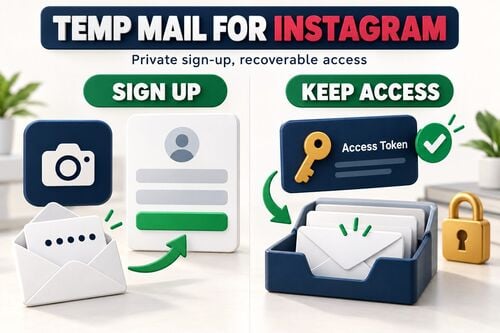
Create the temp inbox first, keep it open during signup, confirm the LinkedIn email promptly, and save the Access Token before you leave. That sequence gives you the privacy benefit of temp mail without losing the ability to revisit the same address later.
Step 1: Create a reusable inbox
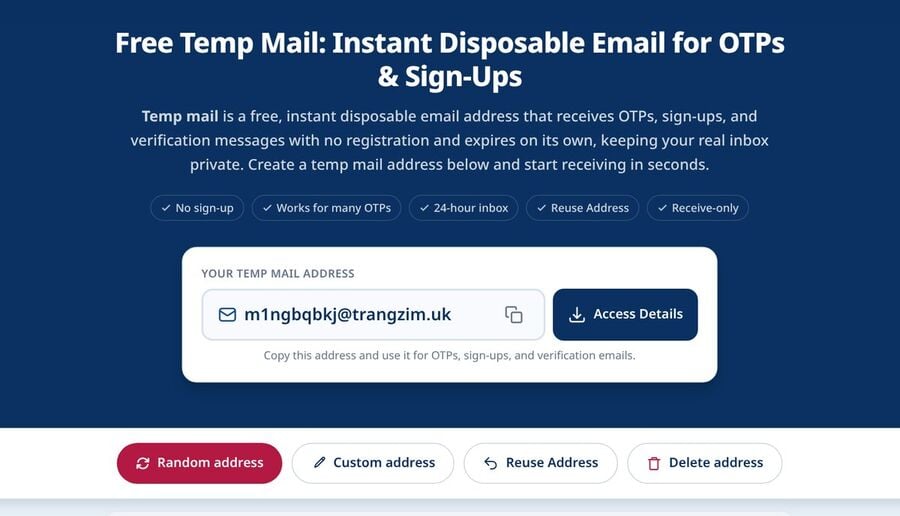
Open free temp mail, generate an address, and immediately record its Access Token in a password manager or secure note. The Access Token is a reuse and recovery key for reopening the same address later — it is not a password, and a lost Access Token cannot be recovered by support. See how token-based reuse works on the reuse temp mail address page.
Step 2: Open LinkedIn’s signup page and submit your email
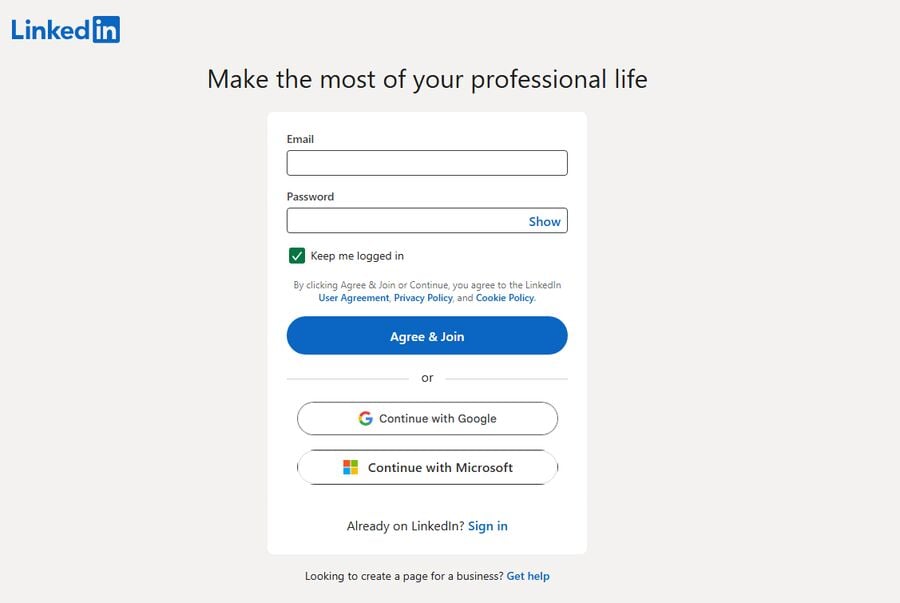
Go to LinkedIn’s join page at linkedin.com (desktop recommended) and enter your Tmailor address. Keep the inbox open and refresh for the confirmation message. If nothing arrives in 60–120 seconds, request it once more and wait — don’t spam the form.
Step 3: Rotate the domain once, if needed
If delivery still stalls, switch to a different Tmailor domain and resubmit—more on this in domain rotation for OTP reliability.
Step 4: Enable two-factor authentication
Once the account is live, turn on 2FA to protect the profile. LinkedIn supports SMS and authenticator app verification, and some LinkedIn products, such as Recruiter, require 2FA.
Step 5: Store your Access Token securely
Keep the Access Token in a password manager. It preserves access for future password resets and email changes.
Getting the LinkedIn Confirmation Email to Arrive
Missed emails can occur due to sender reputation, greylisting, or timing windows. Two tactics fix most cases: keep the inbox open and wait 60–120 seconds before requesting the email once more, and change the receiving domain once rather than resubmitting repeatedly. The temp mail mobile app makes it easier to watch the inbox while you wait, and the fundamentals of receiving verification codes with temp mail apply here, too.
Long-Term Access & Recovery
LinkedIn profiles often live for years, so plan beyond day one. A reusable, token-protected inbox keeps password resets viable without exposing your primary address — but the inbox view only shows messages for about 24 hours, so capture reset links promptly. For sensitive changes such as security emails or employer verification, add and confirm a permanent email and make it primary; keep the temp address as a backup if you like.
Disclosure and limitations. Tmailor publishes this blog, and the steps above use Tmailor's own workflow. Be clear about what that workflow can and cannot do: Tmailor is free and receive-only (you cannot reply from it), inbox messages stay visible for about 24 hours, and a lost Access Token cannot be recovered by support. If the profile becomes important, add and confirm a permanent or work email early — LinkedIn's recovery flow can require identity verification if you lose access to the only email on the account.
Recruiter, Workplace, and Leadership Verification
LinkedIn treats professional identity seriously. LinkedIn says workplace verification uses a current company email that matches your employer's domain, and that it is available only for select companies while support expands. LinkedIn Recruiter users must enable 2FA. If your goal is a recruiter, client-facing, or employer-verified presence, use a work email rather than temp mail, and keep temp mail for private signups or as a backup address.
Keep It Legitimate
LinkedIn is a real-identity network. Using a temporary email for privacy at signup is fine; using one to impersonate a company, Recruiter, or executive is not, and temp mail is not for spam, automation, or returning after an account enforcement action. Keep your profile truthful, enable 2FA, and add a work email if you claim a leadership or recruiting role.
Frequently Asked Questions
Can I create a LinkedIn account with a temporary email only?
Yes, if the confirmation email arrives and you complete the step. LinkedIn's public Help pages document email confirmation, and separate pages cover 2FA, workplace verification, and account recovery. If the address is not accepted or the message does not arrive, try another Tmailor domain.
Does LinkedIn block temp mail domains?
LinkedIn does not publish a Help page listing accepted or rejected disposable-email domains. A provider with many domains helps — switch to another Tmailor domain if the first is not accepted, or use a custom private domain for a more conventional address.
What if the LinkedIn confirmation email never arrives?
Keep the Tmailor inbox open, wait 60–120 seconds, then request the email once more. If it still does not arrive, rotate to a different Tmailor domain and retry.
Can I reuse the same temp address for LinkedIn later?
Yes, if you saved the Access Token, reopen the inbox and reuse your temp mail address. Note that messages older than 24 hours are not retained, so capture reset links promptly.
Do I need a phone number for LinkedIn?
Not for the email-confirmation step documented in LinkedIn Help. Temp mail only covers the email step. LinkedIn does support SMS and authenticator-app 2FA, and it recommends adding another recovery method such as a secondary email or phone number.
Will I miss password resets later?
Not if you saved your Access Token and still control the reusable inbox. For a profile you rely on, add a permanent email as the primary address.
Is a custom private domain better for LinkedIn?
Often, for higher-trust use. A domain you own can look more conventional and keep recovery more durable than a public disposable inbox, but LinkedIn may still apply its own checks.
Can I change my LinkedIn email after signing up?
Yes. Add a new email in settings, confirm it, then make it primary. Keep the temp inbox as a backup if you like.
Is temp mail okay for a recruiter or company page?
No, not if you need workplace verification or LinkedIn Recruiter access. LinkedIn says workplace verification uses a current company email, and Recruiter users must enable 2FA. Temp mail is better suited to private, personal, or test profiles.
The Bottom Line
Temp mail for LinkedIn is a clean way to create a private or temporary account without handing over your personal inbox. Open the disposable inbox first, use a provider with many domains so the confirmation email arrives, and save the Access Token in case you need to reset or change the address later. But because LinkedIn is a real-identity network with stricter checks, keep any profile you truly care about — especially a recruiter, leadership, or long-term account — on a permanent or work email with 2FA.

Marcus Lee writes Tmailor's step-by-step guides — signing up to apps and platforms with temp mail, using the mobile app and Telegram bot, custom domains, reusing addresses, and getting the most out of disposable email day to day.