 Tmailor
 Edu Email Generators: Do They Actually Work?
"Free edu email" tools promise student pricing and .edu perks in seconds. This guide explains what they really give you, why they fail, the risks of a fake student identity, and the legitimate ways to get a student email and student discounts.
Quick access
Can You Generate a Free .edu Email? (The Short Answer)
No, you can't reliably generate a free .edu email with an online tool. Most "edu email generators" hand out shared inboxes that get banned fast, or are scams that harvest your data — and faking a student identity violates the terms of the services you're trying to unlock. A real .edu comes only from an accredited institution, never a generator, and most student discounts don't actually need one.
The confusion comes from mixing two different things. A real .edu address is issued by an accredited institution to someone with a genuine tie to it. What a generator hands you is a temporary or shared inbox on a domain that looks academic. That distinction is exactly what GitHub, paid software, and retail student programs check, which is why generated addresses fail where they matter most.
- Generators give you a throwaway inbox on a lookalike domain, not a verified student identity.
- A real .edu comes from an accredited school; you can't self-issue one.
- Most student perks are verified by documents or enrollment data, so a .edu is often optional.
- Using a fake student status can get your account and discount revoked, and some generator sites carry real security risks.
What "Edu Email Generators" Actually Give You
An edu email generator gives you a shared or throwaway inbox on a school-like domain — not a verified student account. Understanding what is really behind the button explains why these addresses rarely survive a real check.
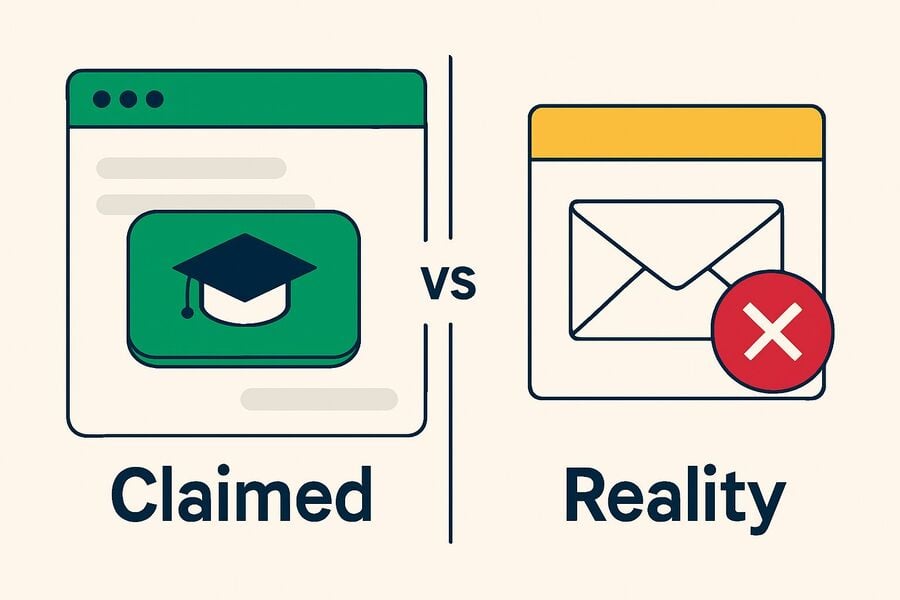
Most of these tools fall into a few buckets. Some are ordinary temp mail dressed up with an academic-sounding domain, so the inbox is public and anyone can read it. Others rent lookalike domains on cheap or offshore extensions — the ones you see ranking on .su, .to, .vn, and .pl — which get added to disposable-domain blocklists quickly. A third group consists of scripts that auto-fill a school's real sign-up form; these break the moment the institution patches its process, and running them can itself violate the school's rules.
The practical result is short-lived and fragile. Because the most popular disposable domains are also the most frequently blocked, an address that works this morning may be refused this afternoon. Our guide to the sites that block temp mail explains why lookalike academic domains are among the first to be filtered.
The Real Risks of a Fake Student Email
The downside of a fake student email is bigger than a blocked signup — it can cost you the account and the discount and expose you to fraud. Because this touches money and your data, it is worth being blunt about the risks before you paste an address into a generator.
The first risk is a clawback. Student programs re-verify, and when a fake status is caught, the perk is withdrawn and the account can be suspended. The second is legal and financial: claiming a discount, license, or benefit you're not entitled to is misrepresentation, and for paid software or academic benefits that can shade into fraud. The third is security. Many generator sites are ad-heavy or outright malicious, and a "free .edu" landing page is a classic hook for data harvesting or malware. Finally, there is no recourse — when a shared inbox disappears, so does any account tied to it, and no one is going to help you get it back.
If you're weighing whether disposable email is safe for a given task at all, our explainer on whether temporary emails are safe lays out where they fit and where they don't.
How to Get a Real .edu Email
A real .edu comes from a genuine relationship with an accredited institution — most often active enrollment and, at some U.S. schools, alumni status or continuing-education status too — always under that school's own policy. What it never comes from is a generator.
The important point is that the school issues the address; it isn't something you create yourself. Policies differ: some institutions hand out an address the day you register, some reserve it for degree-seeking students, and some keep it active for alumni. There's no shortcut around that, and this guide won't pretend there is one.
One common myth also needs clearing up: plenty of legitimate students never get a .edu address at all. It's especially uncommon outside the United States, where universities use their own national or country-code domains, and many community and vocational programs don't issue one either. "No .edu" does not mean "not a student" — which is exactly why the services that offer student pricing don't rely on the address alone.
How Student Discounts Actually Verify You (Often Without a .edu)
Most student pricing is granted by the brand but verified by a third party — and that verification usually accepts documents, not just a .edu address. This is the part the generators don't want you to know, because it makes them unnecessary.
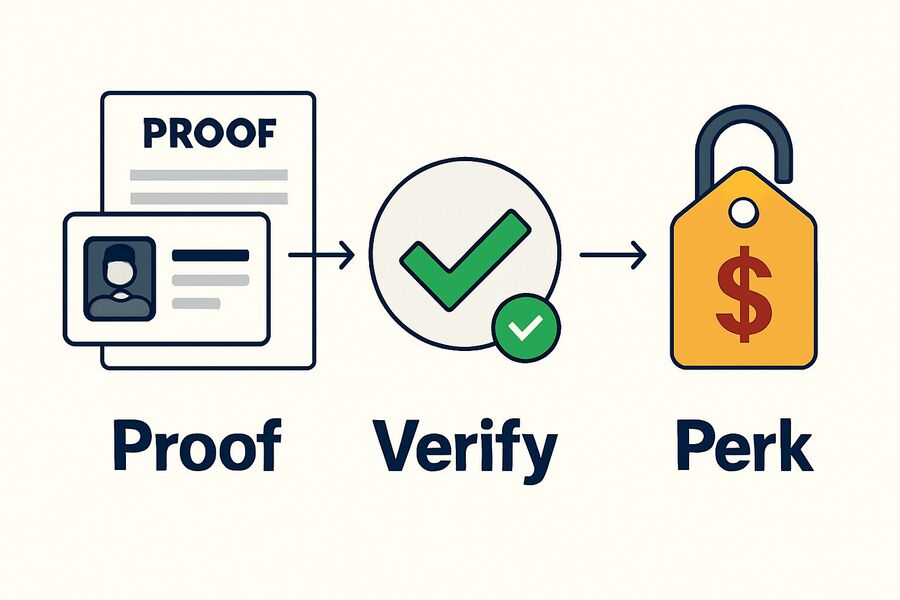
Verification platforms confirm your status; the brand then grants the perk. The major ones each offer a path that doesn't require a school email. SheerID can verify through authoritative enrollment data, single sign-on, an email loop, or document review. UNiDAYS exposes an "I don't have an institution email address" option and accepts a photo ID card or other institution documents. Student Beans lets you verify through a learning portal or manual proof such as a student card, acceptance letter, or transcript. As a real example, Spotify's U.S. student discount is verified through SheerID, not a .edu inbox.
The GitHub Student Developer Pack is the one worth reading closely, because the application is school-specific. GitHub's current public guidance says students may need a school-issued email address or other documents proving enrollment, so the safest approach is to follow the prompts for your own institution.
| Verifier | How it checks you're a student | Needs a .edu? |
|---|---|---|
| GitHub Education | School-specific: a school-issued email address or other documents proving enrollment | Sometimes |
| UNiDAYS | A school email, or an "I don't have an institution email" path using a photo ID card or other institution documents | No |
| Student Beans | A school email, or manual proof (student card, acceptance letter, academic transcript, or student-portal screenshot) | No |
| SheerID | Authoritative data sources, single sign-on, an email loop, or document review | No |
So the honest answer to "how do I get student pricing without a .edu" is not a generator — it's document verification, which most students can pass with what they already have.
Why Temp Mail Is Not a School Email
A temp mail address is a private, disposable inbox — it is not a verified school account, and it won't pass student verification. It's important to be clear about that boundary so you use each tool for what it's good at.
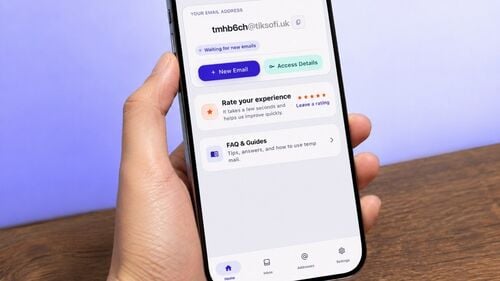
Where a temporary inbox genuinely helps a student is privacy, not proof. It's useful for low-stakes signups that don't require a .edu at all — a trial, a forum, a newsletter, or a download — where you'd rather not hand over your primary address. Tmailor is free, requires no registration, is receive-only, and lets you reopen the same address later with a saved Access Token; but it is a temp mail service, not a school, so it can't issue a .edu or unlock student pricing. For the legitimate ways students and researchers use disposable inboxes in their coursework, see our guide to temp mail for education. And when you simply want a private inbox for a non-.edu signup, you can create a free temp mail address in seconds.
Frequently Asked Questions
Can I get a free .edu email address?
No — a real .edu comes from an accredited institution, not a generator. What generators hand out are temporary lookalike inboxes that get blocked quickly and won't pass a real student check.
Can I get a free student email legally?
You can get free student perks legally through verification programs, but a real student email is issued by your institution, not by a generator. If you're enrolled, your school provides the address; if you're not, no legitimate tool can create one for you.
Is a temp college email real?
No. A "temp college email" is a disposable inbox on a college-like domain, not a verified student account. It may receive a message, but it won't satisfy the enrollment checks that student discounts and academic tools run.
Are edu email generators safe and legal?
They're risky on both counts. Many generator sites harvest data or serve malware, and using a fabricated student status to claim discounts or benefits violates the terms of those services and can amount to misrepresentation.
Do student discounts require a .edu email?
Often no. Depending on the service, verification may work with documents such as a student ID, acceptance letter, transcript, or student-portal record, so a school email is frequently optional rather than required.
Can I use a temp mail address to sign up for student services?
For privacy on signups that don't require a .edu, yes — a temp mail address keeps your real inbox clean. To prove you're a student, no; verification checks your enrollment, not the type of inbox you use.
The Bottom Line
Edu email generators sell a shortcut that doesn't hold up: the address is shared or quickly blocked, the risks range from a revoked discount to malware, and none of it produces the verified student status the perks actually check. If you're enrolled, your school issues a real .edu; if you're chasing a discount, document verification usually gets you there without one. Keep temp mail for what it's genuinely good at — private, disposable signups — and skip the "free .edu" promise altogether.

Minh Nguyen is the founder of Tmailor and the developer who publishes the Tmailor temp mail apps on the App Store and Google Play. He has built and operated Tmailor's free, receive-only disposable email service since 2022, focusing on reliable OTP delivery, inbox privacy, and reusable temp mail addresses.