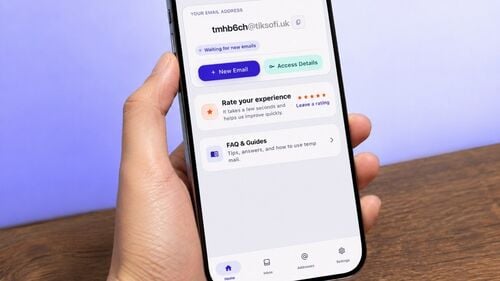
Lost Your Facebook Password & Temp Mail Token — What Can You Still Do?
It's the worst-case scenario: you need to reset your Facebook password, but the account's email address is a temp mail address, and you've lost the Access Token to reopen that inbox. Facebook wants to send a recovery code to an address you can no longer access, and there's no "undo" button for either side. This playbook is honest with you about the odds. It maps the recovery paths that can still work — a device you're still signed in on, a linked phone, a confirmed second email, Facebook's own identity check — and it's clear about the case where none of them apply. It also covers what to set up now, so a lost token never locks you out of an account that matters.
Quick access
TL;DR / Key Takeaways
- The honest headline: if you have lost the password, lost the Access Token, and are signed out everywhere, you most likely cannot get the account back. That is not a gap in the system — it is the system working as intended.
- A lost Access Token cannot be reissued by anyone, including tmailor.com. Without it, that inbox is closed for good, so the email route to recovery is closed with it.
- Your remaining paths all depend on something other than the dead inbox: a device you are still signed in on, a linked phone, a second confirmed email, or Facebook's own identity check.
- If you are still logged in anywhere, do this first: add and confirm a durable email you actually control, then change the password. Do not wait.
- Messages in a temp inbox are visible for about 24 hours from arrival, so a reset must be finished in one sitting.
- tmailor.com can reopen the same address with an Access Token, and continuity of that kind varies across disposable-email providers — but a token is a recovery key, not a lock, and it makes a poor foundation for an account you care about.
- Pair a durable inbox with 2FA and backup codes for anything long-term, and keep tokens and credentials in a password manager.
Introduction
If you have lost both your Facebook password and the Access Token for the temp inbox on that account, your options come down to one question: do you still control anything else Facebook recognizes? A signed-in phone or browser, a linked phone number, a second confirmed email, or an identity check you can pass. If the answer is no — the temp inbox was the only route in and it is now unreachable — then in most cases the account is gone. This guide will not pretend otherwise.
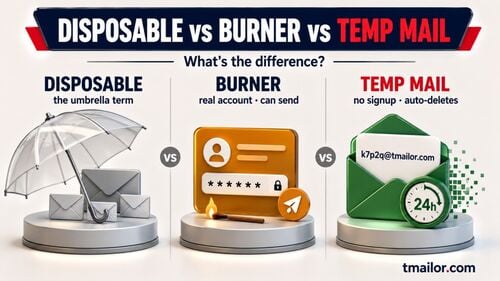
Disclosure: tmailor.com publishes this blog and makes the temp mail service discussed here. Its limits, up front: it is receive-only, it strips inbound attachments, messages stay visible for only about 24 hours from arrival, and a lost Access Token cannot be recovered by anyone. Those limits are precisely why a temp inbox is a bad place to anchor an account you intend to keep.
One boundary before we start. Everything below is written for the person whose account it is. Facebook's identity checks exist specifically to stop anyone else from doing this; they are not a puzzle to be solved, and nothing here will help you into an account that is not yours.
To understand why recovery gets risky with short-lived inboxes in the first place, see the pillar explainer: Facebook recovery risks.
Understand Recovery Mechanics
Every account recovery is the same negotiation: the platform needs to be convinced you are who you say you are, and it will only accept evidence it already holds. A password reset sent to your email is the cheapest such proof — which is exactly why it collapses when the inbox is gone.
Facebook's password reset starts from its own "Forgot password" flow and sends a code or link to a contact point already on the account. What else it offers — a recognized device, a linked phone, an identity check — depends on the account, and the options can differ from one account to the next. Treat whatever appears on screen as the recovery menu available to you, and work through it rather than looking for a shortcut around it.
So why does the inbox matter so much? Reset links expire, and if you cannot open the message before the window closes, you end up requesting code after code — which can trip rate limits and slow you down further. Everything therefore hinges on whether you can still open the address the account was built on.
The underlying risk model is worth internalizing, because it explains the whole article:
- A short-lived temporary inbox is great for sign-ups you can walk away from, and useless for recovery. The mail is gone in about a day.
- A reusable temp address is only as durable as the Access Token you saved. Lose the token, and it collapses into the case above.
- A durable inbox you own — Gmail, Outlook, or your own domain — is the only one that is still there in a year, which is the actual requirement for account recovery.
There is a second, less obvious reason not to anchor a real account to a temp inbox: an Access Token is a recovery key, not a password. It has no second factor. Anyone holding it can open that inbox — and therefore anyone holding it can request a password reset for every account tied to that address. A temp inbox is a fine place to receive a code. It is a poor place to keep the keys to your identity.
Reopen a Temp Address Safely
This is the good case: you still have the Access Token, so the address is still reachable and the email route to recovery is still open. Reopen the inbox first, then start the reset — not the other way around, or the code may expire while you are hunting for the token.
- Reopen the inbox with your token. Paste it into the reuse a temp mail address page. You are now looking at the exact address the account was registered with.
- Request a fresh reset from Facebook and wait for the new message to land. Do not re-request it repeatedly; that is how you end up rate-limited.
- Finish it in one sitting. Messages are visible for about 24 hours from arrival, and there is no spam folder to check — whatever arrives is shown immediately, so if you cannot see it, it has not been delivered yet.
- Then fix the root cause. While you are back inside the account, add a durable email you control and confirm it. Until you do, you are one lost token away from being locked out again.
Recover Without the Token
The token is gone, so the inbox is gone, so the reset email has nowhere to land. What is left depends entirely on whether you still hold anything else the account recognizes. There are two branches, and they are not equally hopeful.
Branch A — you are still signed in somewhere. This is the branch you want, and it is far more common than people assume: an old phone, a tablet, a browser you never signed out of. Check every device before you conclude you are locked out. If you find one, you effectively still hold the account — and you should act immediately, before that session expires:
- Open your Facebook account settings and go to your contact details. Add a durable email you control and confirm it.
- Only then change the password. A reset now goes to an address that will still exist next year.
- Turn on two-factor authentication and save the backup codes somewhere that is not your email.
Branch B — you are signed out everywhere. Be prepared for this to be the end of the road. Start from Facebook's own "Forgot password" flow and work through whatever it offers you: it may recognize a device or browser you have used before, it may be able to reach a phone number still attached to the account, or it may ask you to confirm your identity. Follow the on-screen options exactly and do not submit request after request — repeated attempts tend to slow the process, not speed it up.
If Facebook offers you no workable option, treat that as your answer rather than hunting for an unofficial shortcut. Recovery rests on evidence that the account is yours — that is the gate an impostor cannot pass, and nothing substitutes for it. An account whose only contact point was a disposable inbox you can no longer open is, in most cases, unrecoverable. Painful, but true; and the right response is not to keep hammering the flow but to make sure the next account is not built the same way.
If temporary inboxes are new to you and you want to understand what they are actually for, start with temporary email basics.
Improve OTP Deliverability

If the reset code has not arrived, resist the urge to keep clicking. Request one code, then give it a minute. Rapid repeat requests are the fastest way to hit a rate limit, and each new request can invalidate the previous code — so the mail you are waiting for may be one you already cancelled.
Two things are worth knowing when you are waiting on a code in a Tmailor inbox:
- There is no spam folder. No filtering happens at all — every message that reaches the address is displayed. So there is no second place to look. If it is not on screen, it has not been delivered, and waiting or re-requesting is the only thing that changes that.
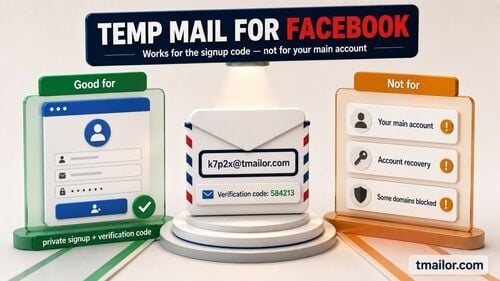
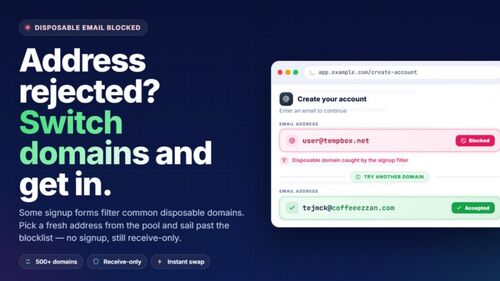
- The platform may simply not send to a disposable address. Many services decline to deliver to disposable domains, and that is a deliberate policy decision on their side, not a fault you can debug. Where that is the case, the answer is to complete the reset with a real address you own — not to keep hunting for a domain the platform has not noticed yet. Sites that have decided against disposable email are entitled to that decision.
Either way, the lasting fix is the same: get a durable inbox onto the account and stop depending on a short-lived one. For a sense of how brief these windows get, the explainer on 10-minute mail is a useful comparison.
Choose Durable Recovery Options
A recovery address has exactly one job: to still be there, and still be yours, on the day something goes wrong. That is a low bar, and a temp inbox cannot clear it. Anything you would be upset to lose needs an inbox that outlives the emergency.
What that looks like in practice: a personal Gmail or Outlook account, or a mailbox on a domain you own. Add it to the account before you need it and confirm it. Use plus-addressing (name+fb@…) if you want to see which site leaked your address without giving each one a different mailbox — a labeling trick, not a privacy shield, since it all lands in the same inbox. Keep your passwords in a password manager, turn on 2FA, and store the backup codes somewhere that is not the email account they protect. If the account is genuinely valuable — a page, an ad account, a business manager — a durable recovery email is not optional.
Team and Agency Hygiene
Shared accounts fail in a specific way: the person who created the mailbox leaves, and the recovery path leaves with them. Teams that hand accounts around need the recovery details written down somewhere other than one person's head.
Treat an Access Token as a credential, because that is exactly what it is — anyone holding it can open the inbox and reset anything tied to it. Keep tokens in a shared vault with role-based access control and an audit trail, never in a chat thread or a spreadsheet. For each account, record the owner, the mailbox, the fallback contact, and the date the recovery path was last tested. Retire temporary inboxes the moment an account goes into production, and actually run the recovery drill once a quarter — a recovery path nobody has tested is a guess.
Recovery Steps at a Glance
If you still have the Access Token
Step 1: Reopen the exact address with your Access Token.
Step 2: Request a fresh Facebook reset and wait for the message.
Step 3: Finish the reset inside the roughly 24-hour visibility window.
Step 4: Add a durable recovery email and confirm it before you close the tab.
If you are still signed in on any device
Step 1: Do not sign out. Check every phone, tablet, and browser first.
Step 2: In your account settings, add a durable email you control and confirm it.
Step 3: Change the password, then enable 2FA and save the backup codes offline.
If you have neither
Step 1: Start from Facebook's official "Forgot password" flow and take whatever option it offers — a recognized device, a linked phone, an identity check.
Step 2: Follow the prompts exactly, once. Repeated attempts slow things down rather than help.
Step 3: If nothing is offered, accept that the account is most likely gone, and build the next one on an inbox you will still control in a year.
Comparison Table
Matched against the one thing recovery actually needs — an inbox that is still openable when you need it — the three options separate cleanly. Provider behavior changes without notice, so treat the middle column as a category to check rather than a fixed rule.
| Criteria | tmailor.com Temp Mail (Access Token) | Short-lived disposable inbox | Durable personal email |
|---|---|---|---|
| Reopen the same address later | Yes — only if you saved the Access Token | Varies by provider; check continuity before you rely on it | Always; it is your account |
| How long messages stay visible | About 24 hours from arrival | Varies, and can be just a few minutes | Until you delete them |
| Fit for account recovery | Weak — hinges entirely on a saved token | Poor for anything you want to keep | Strong |
| Best use | Sign-ups where you might need the same inbox again soon | One-sitting sign-ups and low-risk tests | Long-term accounts and their recovery |
Risk Mitigation Checklist
The whole point of this list is that it is done in advance. Once you are locked out, every item on it is out of reach, which is exactly why recovery so often fails at the worst moment.
- Keep credentials and any Access Token in a password manager, never in a chat message or a plain-text note.
- When a reset code arrives, use it right away, and request only one at a time.
- Add a durable secondary email to the account and confirm it — today, while you still can.
- Turn on two-factor authentication and keep the backup codes offline, not in the email account they protect.
- Test your recovery path on a schedule and keep a short note of each account's fallback contacts.
- For anything mission-critical, anchor it to a durable inbox and treat token-based temp mail as a short bridge, not the foundation.
FAQ
Is token-based reuse available on all temp-mail services?
No. Continuity varies by provider. tmailor.com uses an Access Token to reopen the same inbox later, so do not assume every temp inbox works the same way — check the provider's own page before you count on getting an address back.
Can you support reissuing a lost token for my temp address?
No. If you lose the token, you cannot reopen that exact mailbox.
Why can’t I see old messages after a day?
Temporary inboxes show messages for roughly 24 hours from arrival, then purge by design.
Should I use temp mail for a long-term Facebook account?
Not as the account's email. A temp inbox has no second factor and its mail expires, so it makes a fragile recovery point. Bind a durable email you control and turn on 2FA.
What if reset codes never arrive?
There is no spam folder to check, so if nothing shows, it has not been delivered. Some platforms decline to send to disposable addresses at all; where that is the case, complete the reset with a real email you own rather than trying more addresses.
Can plus-addressing help organize accounts?
Yes. It separates critical logins from clutter while keeping a single durable mailbox.
Do device prompts help if I lose the token?
Sometimes. If Facebook still recognizes a device or an active session, take the recovery option it shows on screen. If it recognizes nothing, device prompts will not appear and this route is closed.
Should teams share tokens in messaging apps?
No. You can use a password manager with roles and an audit trail.
Do you know if I can send emails from these inboxes?
No. tmailor.com is receive-only to reduce abuse vectors.
Do you know if attachments are supported in incoming Mail?
No. tmailor.com strips inbound attachments, so a file sent to the address cannot be opened or downloaded. Reset codes and links, which are plain text, come through fine.
Conclusion
Password recovery is really a question of durability, decided long before anything goes wrong. If your only key to an account is a disposable inbox and the token that opens it, you have built a lock with a single fragile key — and when it snaps, there is usually no locksmith. That is not a flaw to route around; it is the security model doing its job, keeping strangers out at the cost of keeping a careless owner out too.
So the useful takeaways are the boring ones. If you still hold the Access Token or a signed-in session, act now: get a durable email onto the account and turn on 2FA before you do anything else. If you hold neither, work Facebook's official flow once, and if it offers you nothing, let the account go rather than chasing a fix that does not exist. Then build the next account on an inbox you will still control next year. A temp inbox is a wonderful place to catch a code — and the wrong place to keep the keys to anything you would be sorry to lose.
For a deeper look at why recovery gets risky with short-lived inboxes, read the pillar article: Facebook recovery risks.

Marcus Lee writes Tmailor's step-by-step guides — signing up to apps and platforms with temp mail, using the mobile app and Telegram bot, custom domains, reusing addresses, and getting the most out of disposable email day to day.